
Amleto Sartori
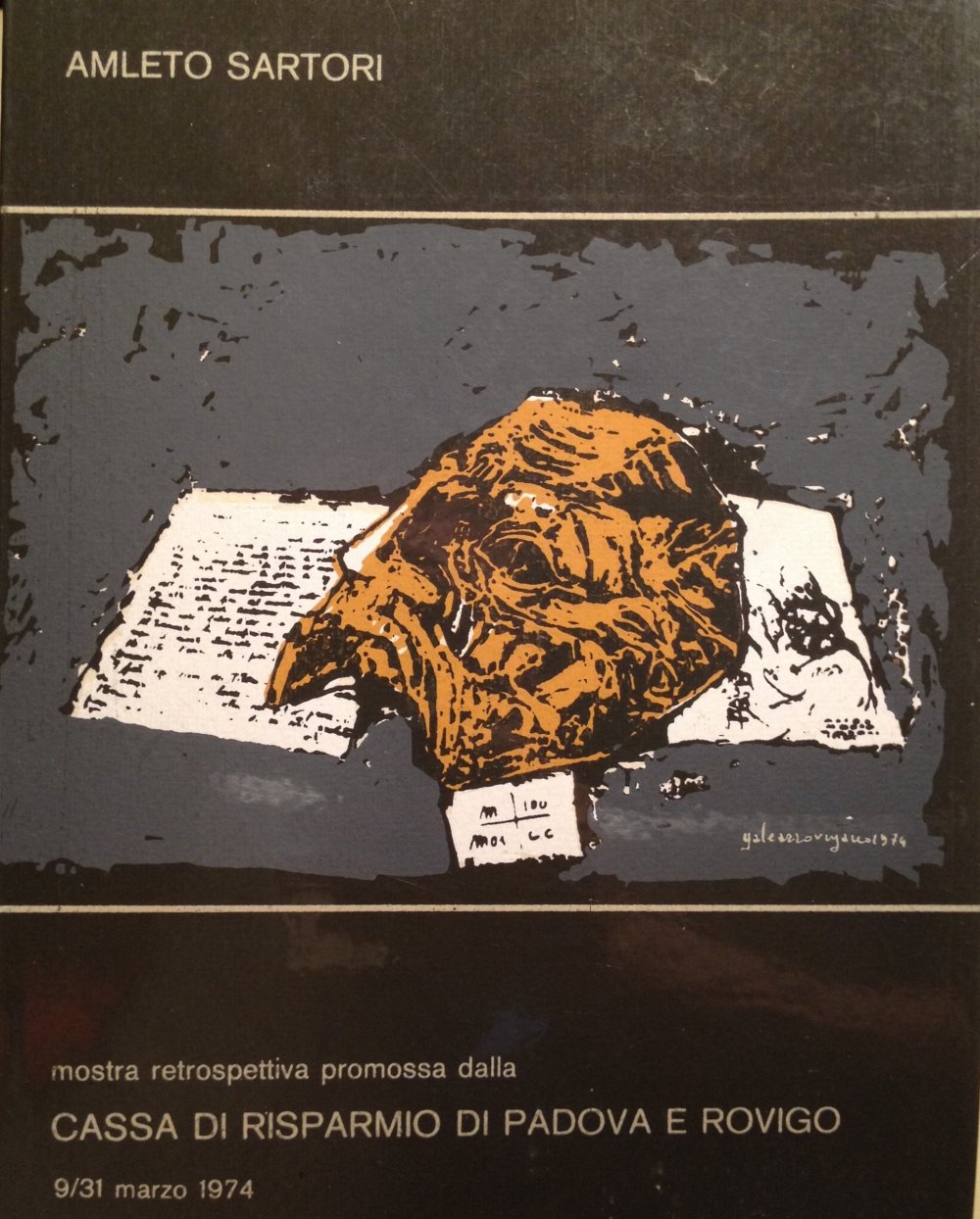
I nabbed this Italian language book off eBay some time ago. It's a hardback catalog for a retrospective of the work of Amleto Sartori from 1974, and it's full of wonderful illustrations of Sartori's work.
Sartori / Leather Masks
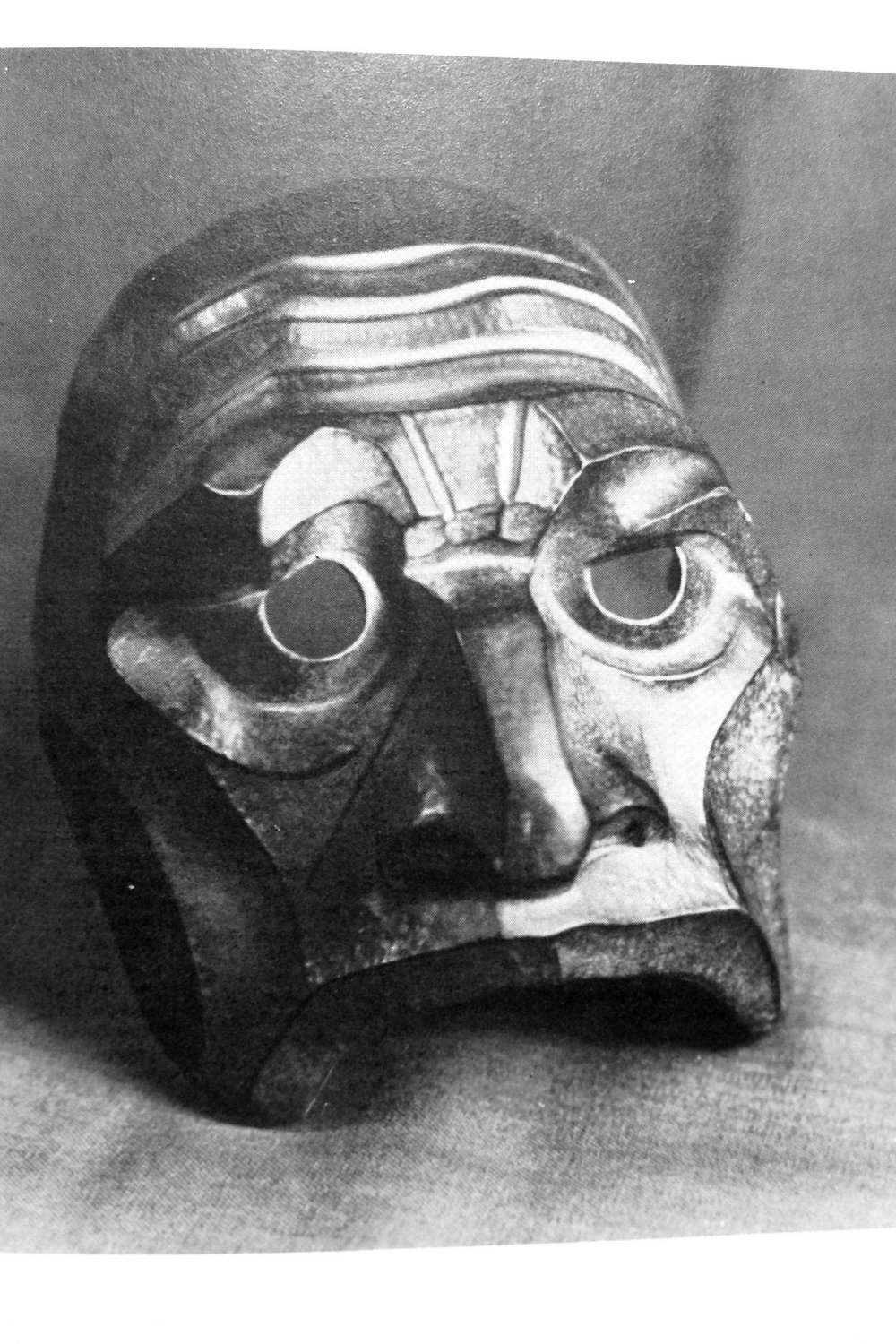
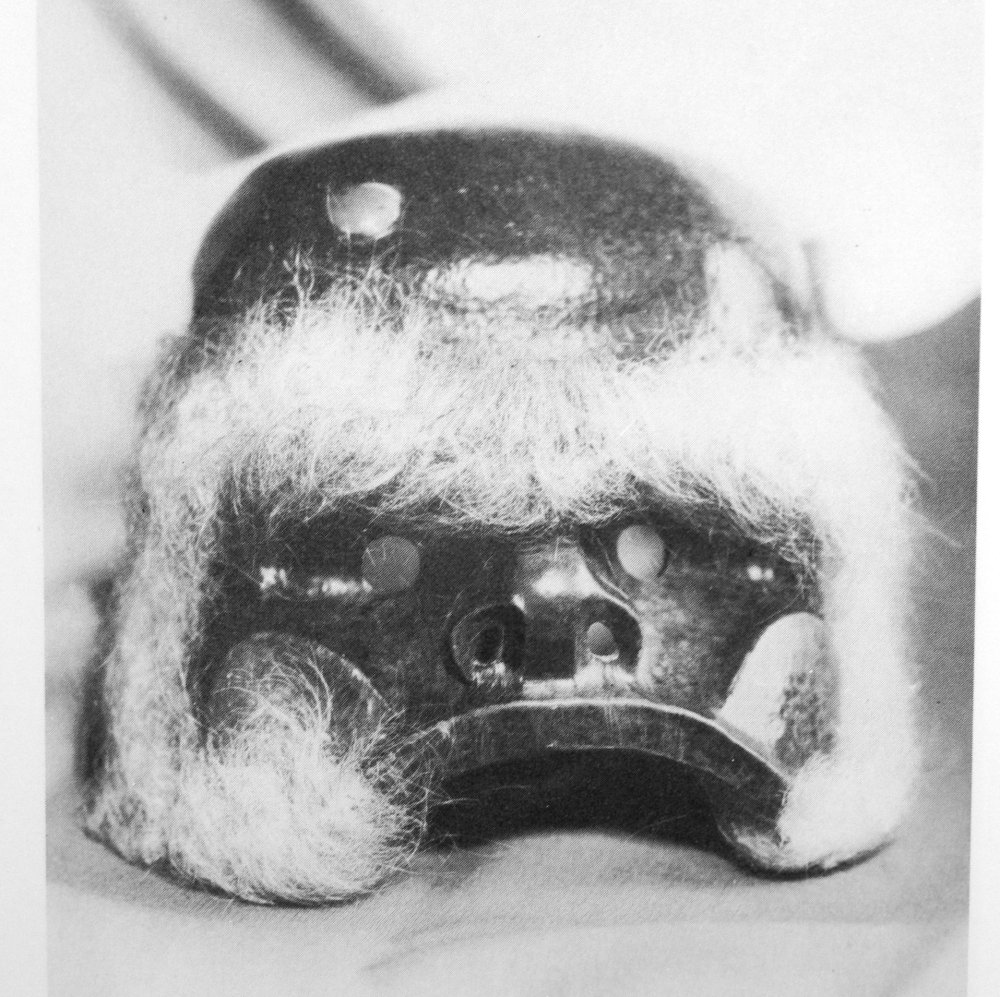
Leather Half Masks
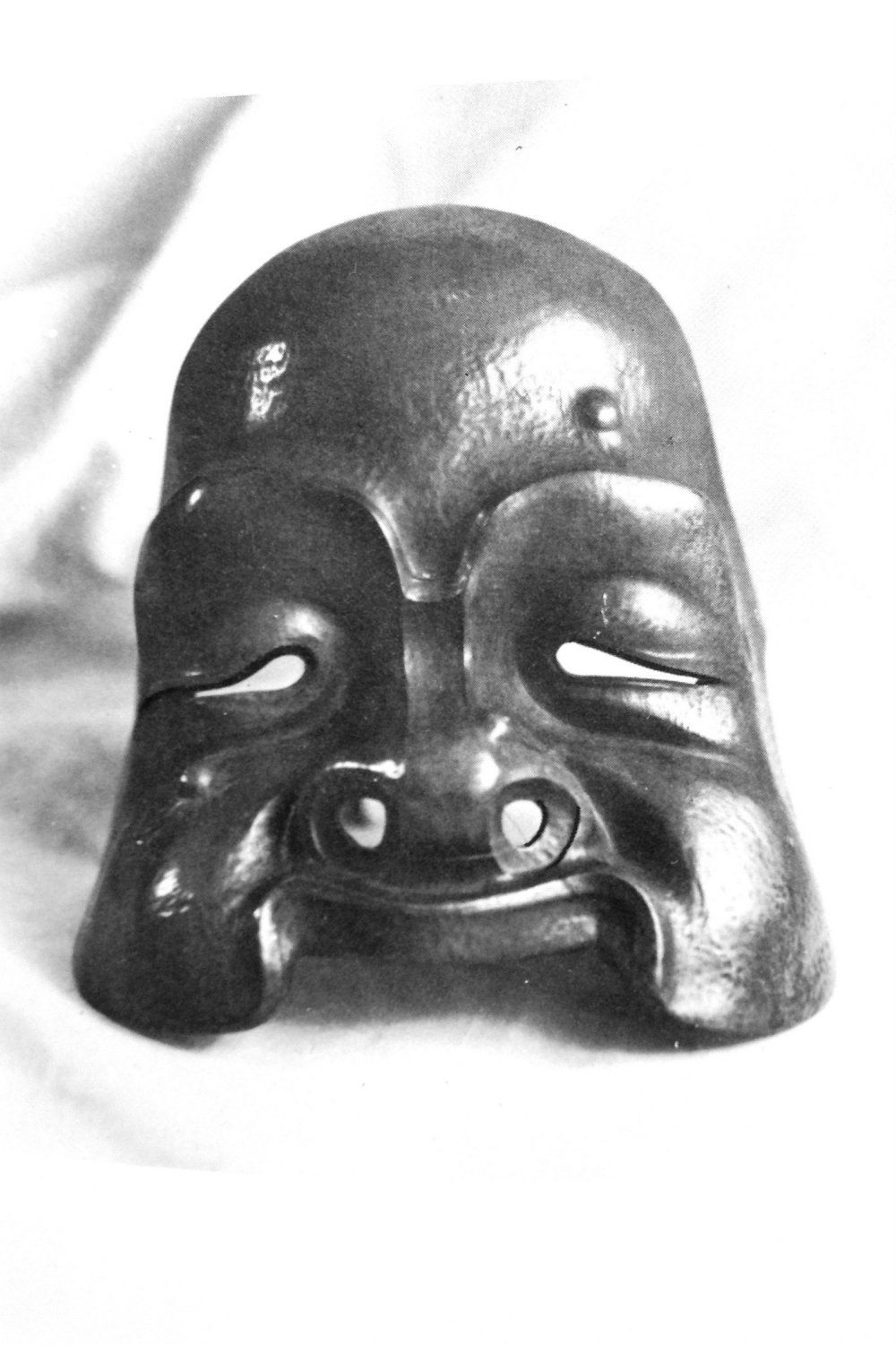
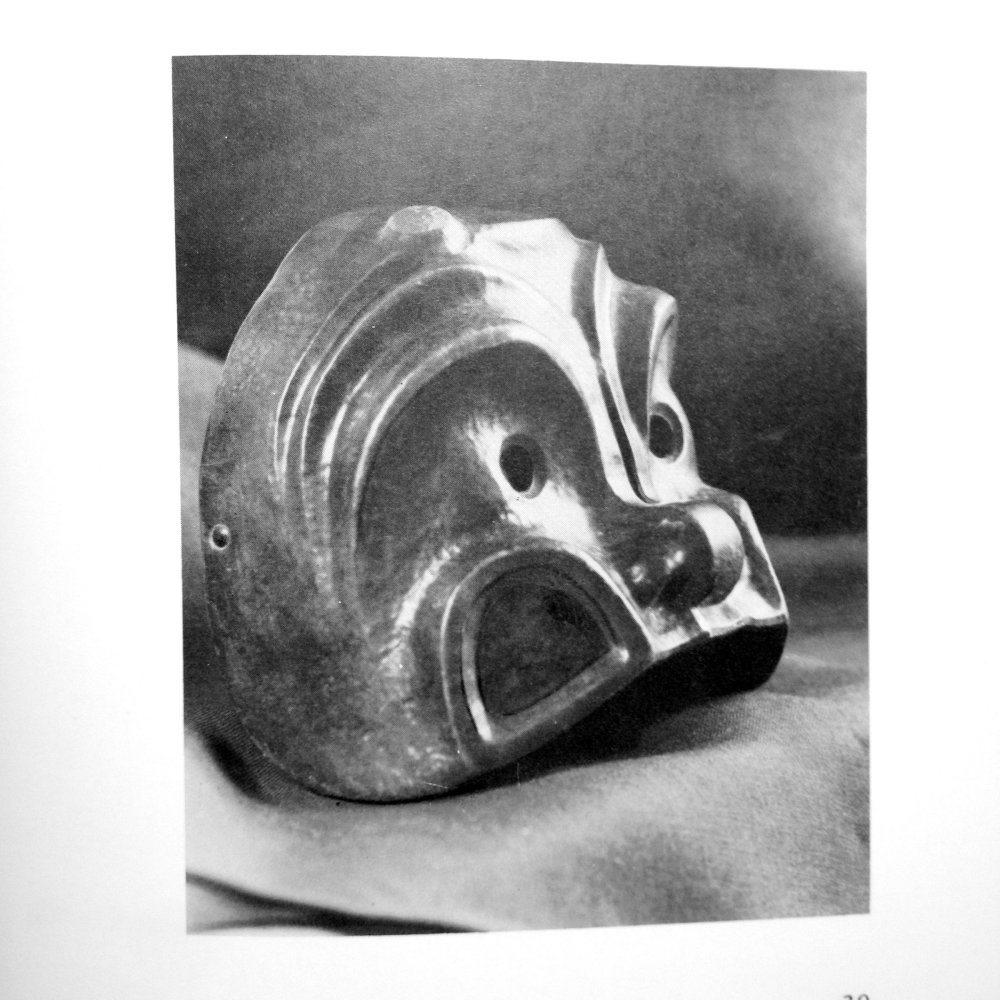
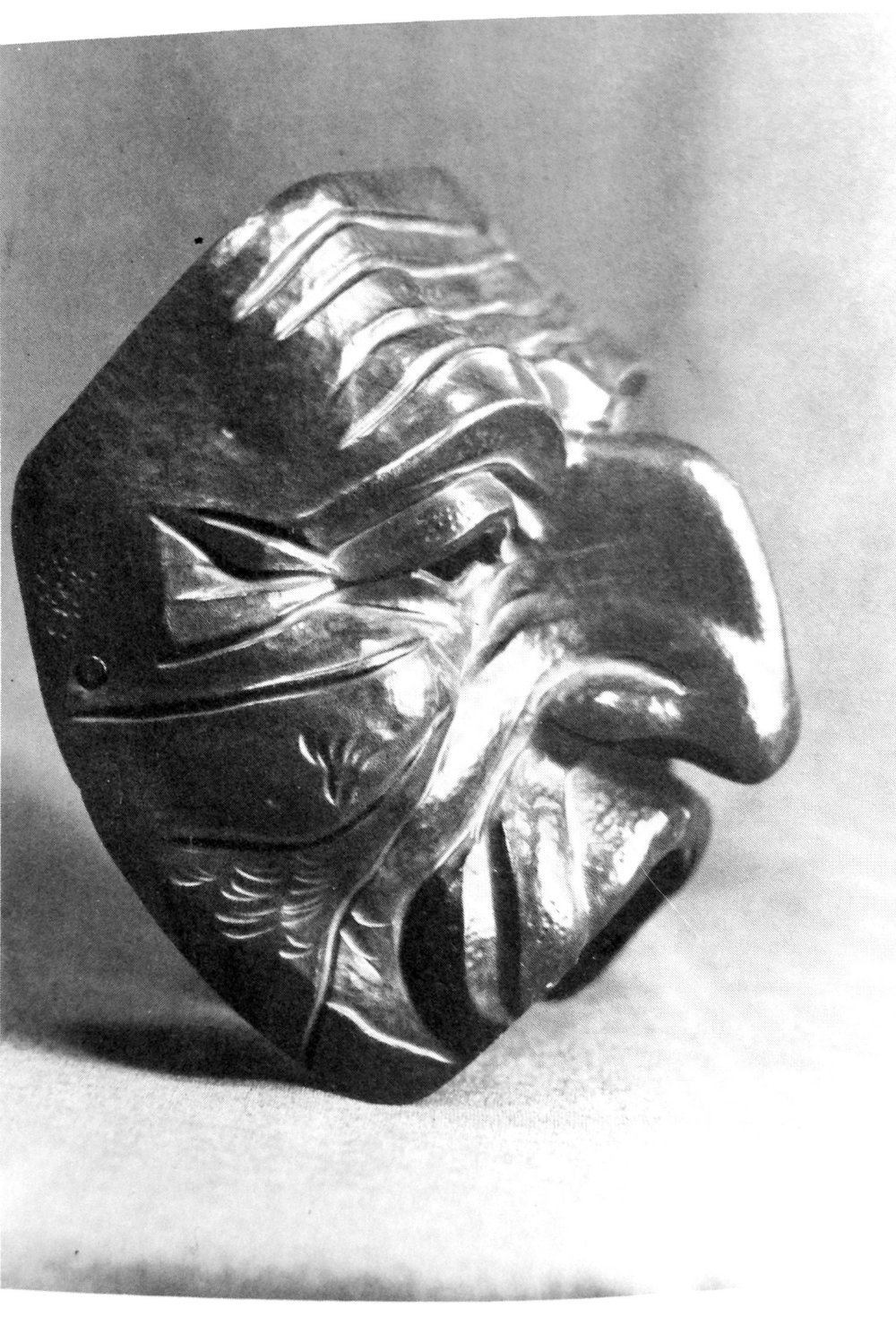
These photographs show the excellent craftsmanship of Sartori's Commedia masks. Strong lines and extreme geometry are common to all Commedia masks. Whether the extreme geometry comes from historical examples, sculpting from reference to line drawings, or the leather molding process is immaterial — it's enough to recognize that Commedia masks have a sculpted style that goes beyond the character types. I consider any architecturally stylized half mask to be in the world of Commedia, whether or not it's representing a canon character type.
Look to these masks for elements of unity. Even in the Arlecchino mask, the most stylized of them all, the brows sweep down and meet to form the bridge of the nose and roll out and over to meet the lip. It's little tricks like these that will help in sculpting a more unified mask, and avoid the potato/pumpkin problem.
Sartori / Sketches
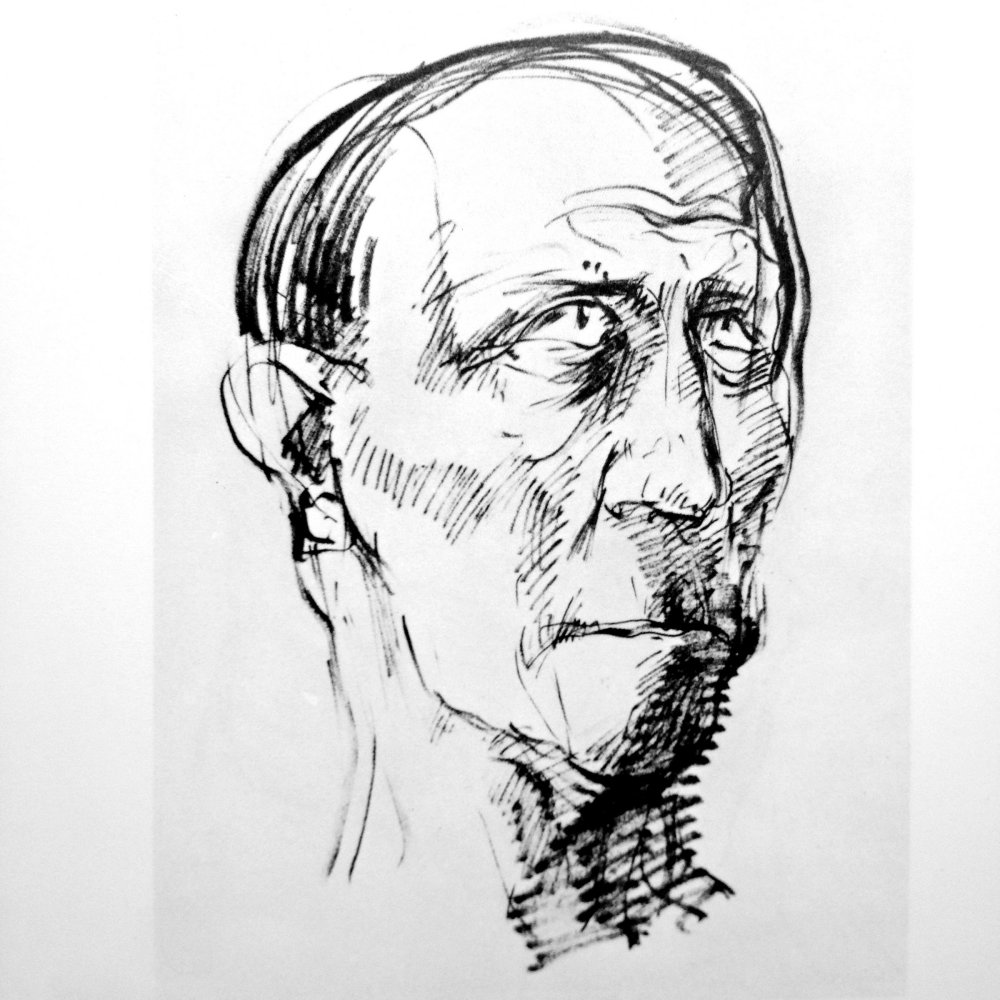
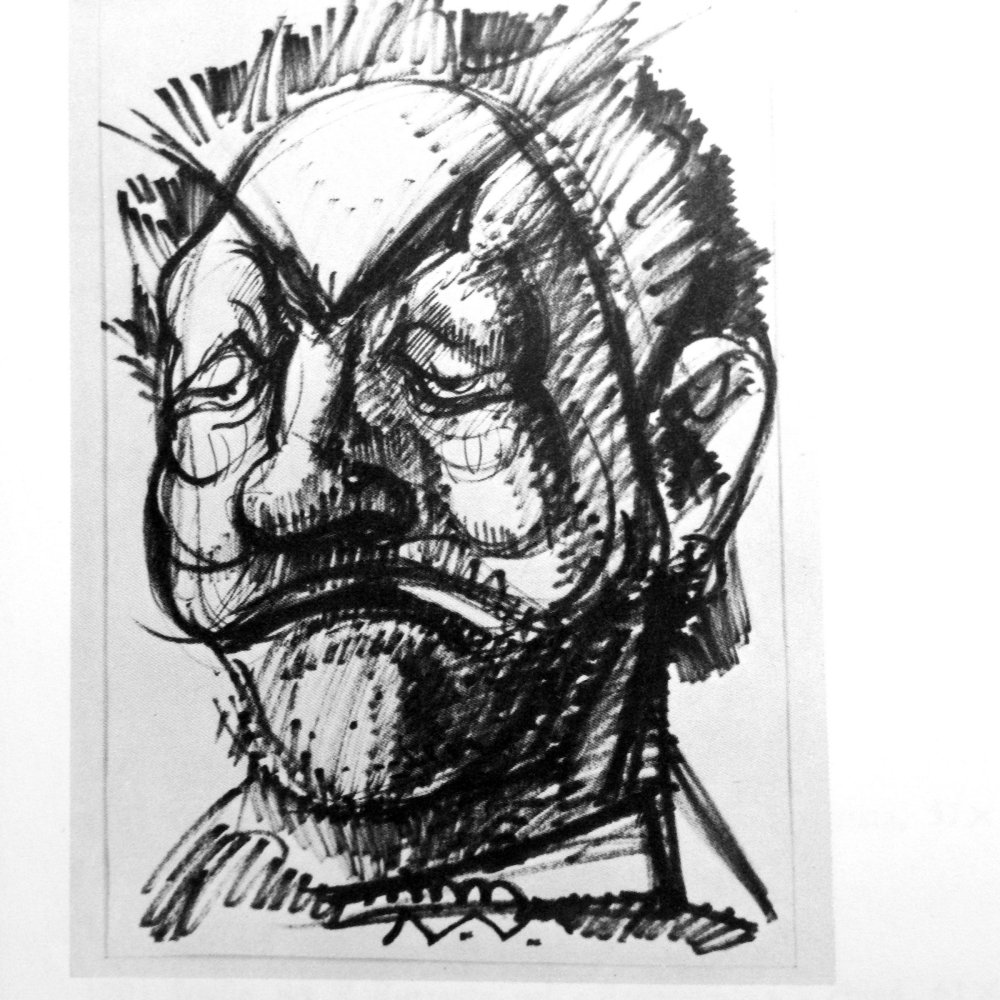
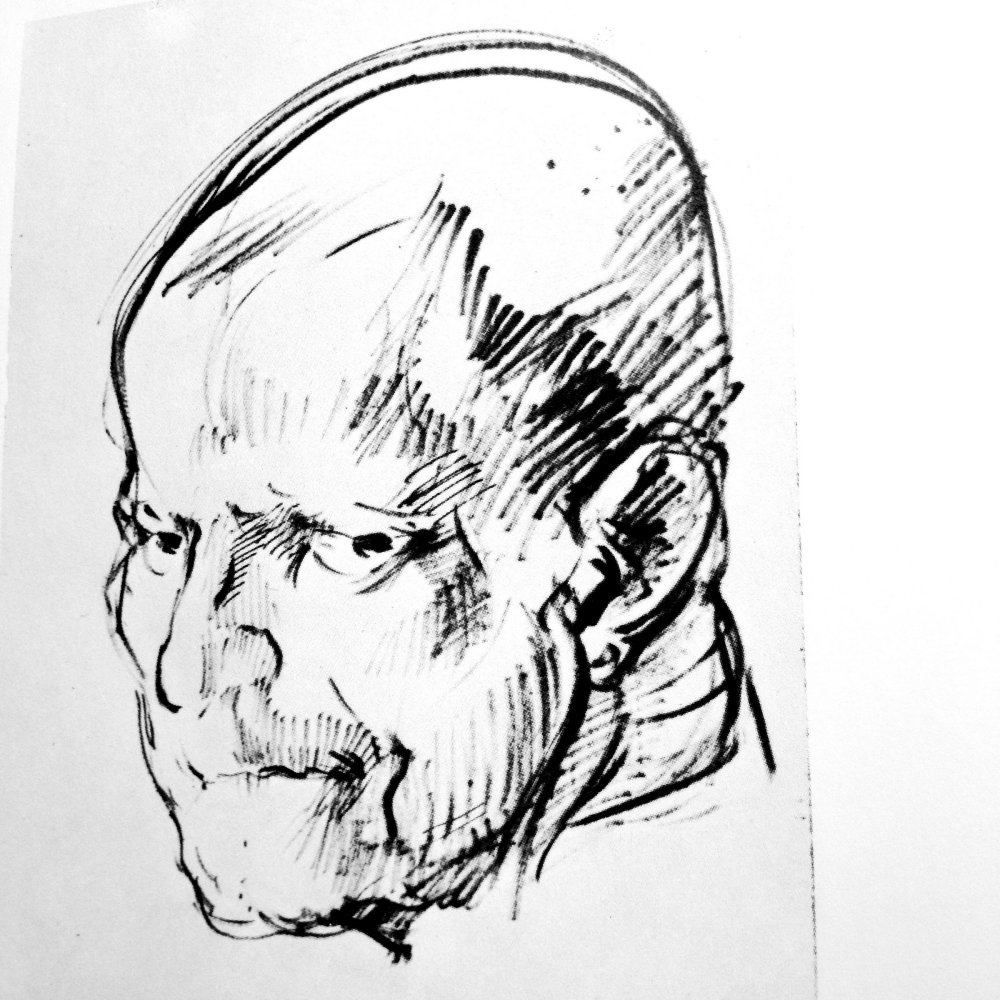
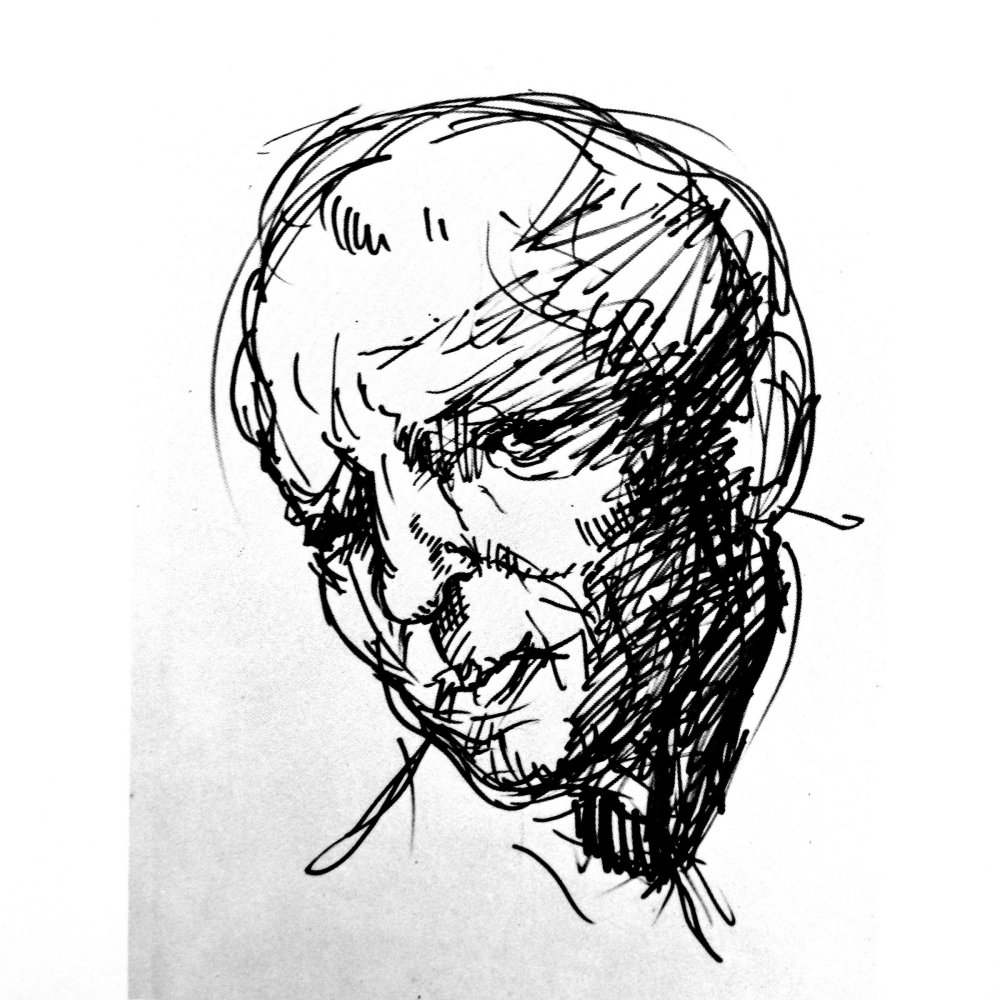
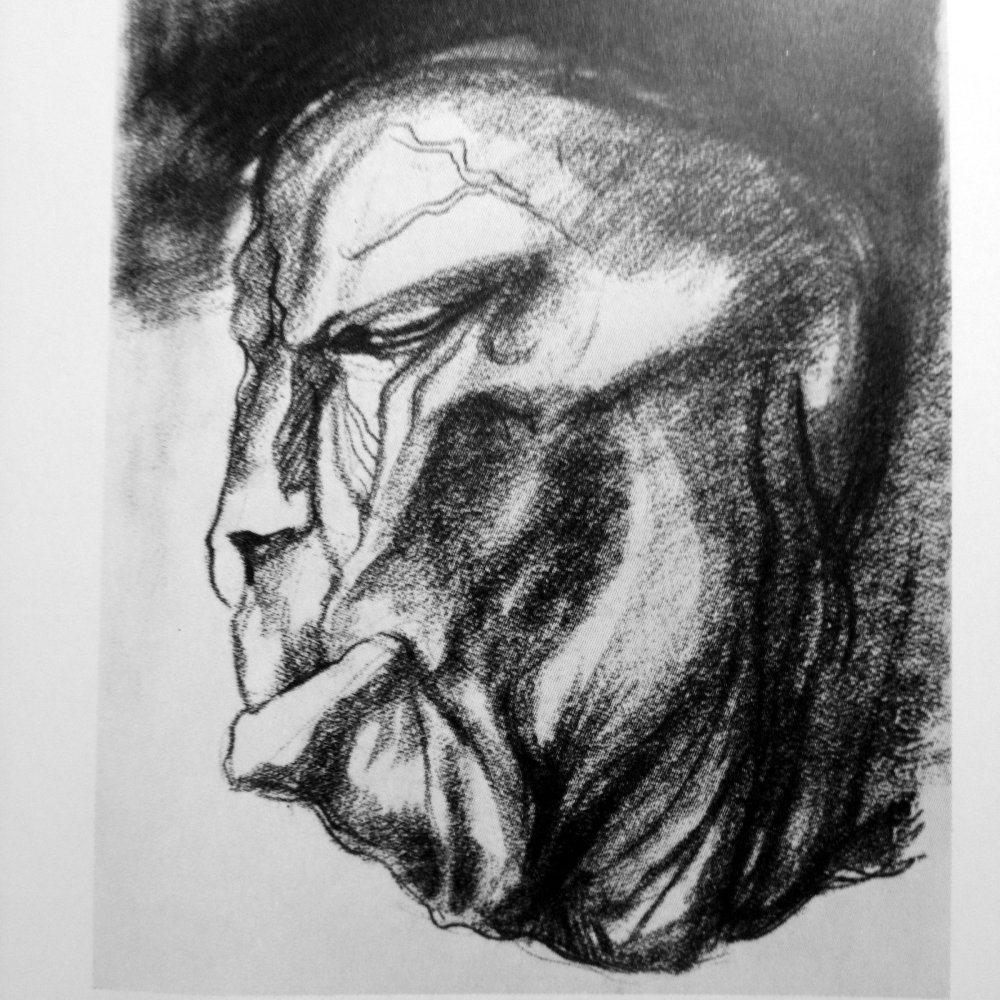
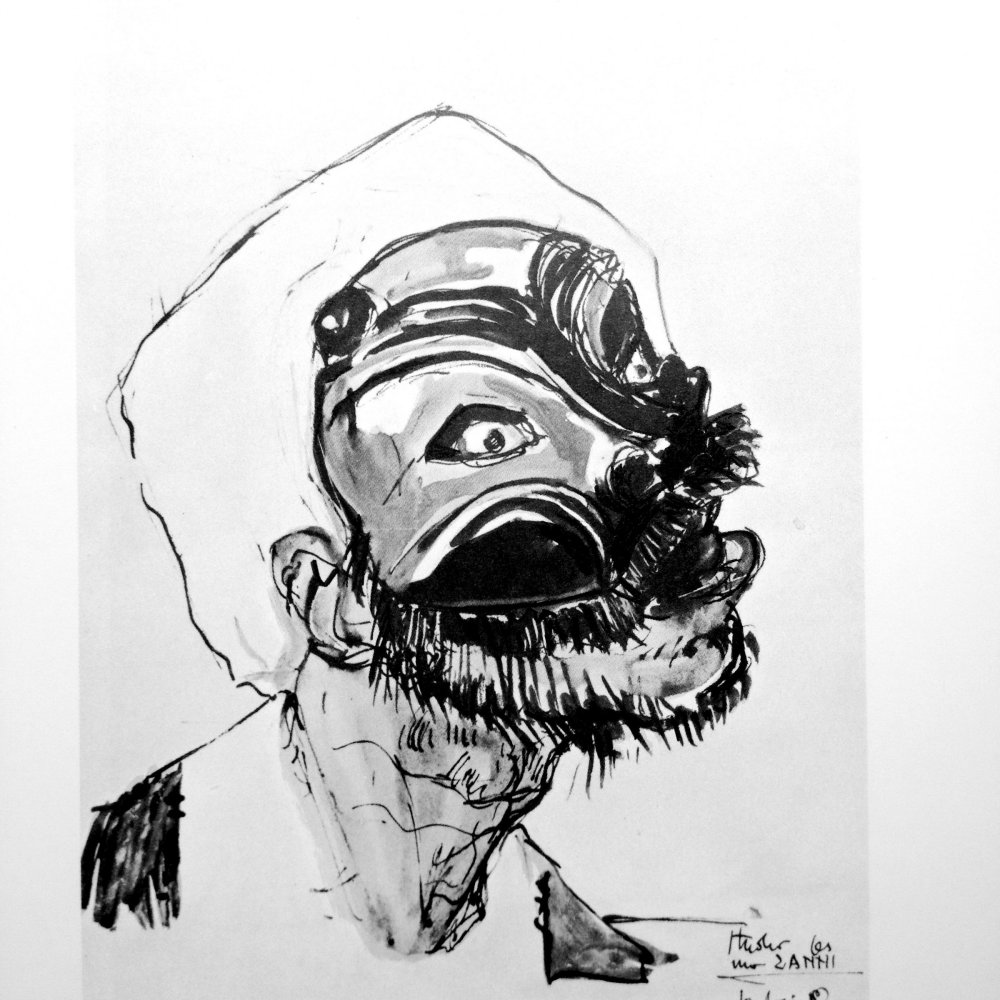
Studies of Volume
These sketches show the deep and playful understanding Sartori had of the expressive volumes in the human face created by intersecting planes. As studies in volume, the drawings are more helpful than the photographs because here the volumes are emphasized to read as three-dimensional structures from the flat page. There is the intention to show volume in the drawings.
If we look closely at them we can learn a very important lesson about making masks. The drawings are not showing the muscular contractions of a passing emotion. The faces are formed through volume and proportion — deeper and more consistent than an emotional expression, they show the impression of character.
Sartori / Sculptures
Surface and Material
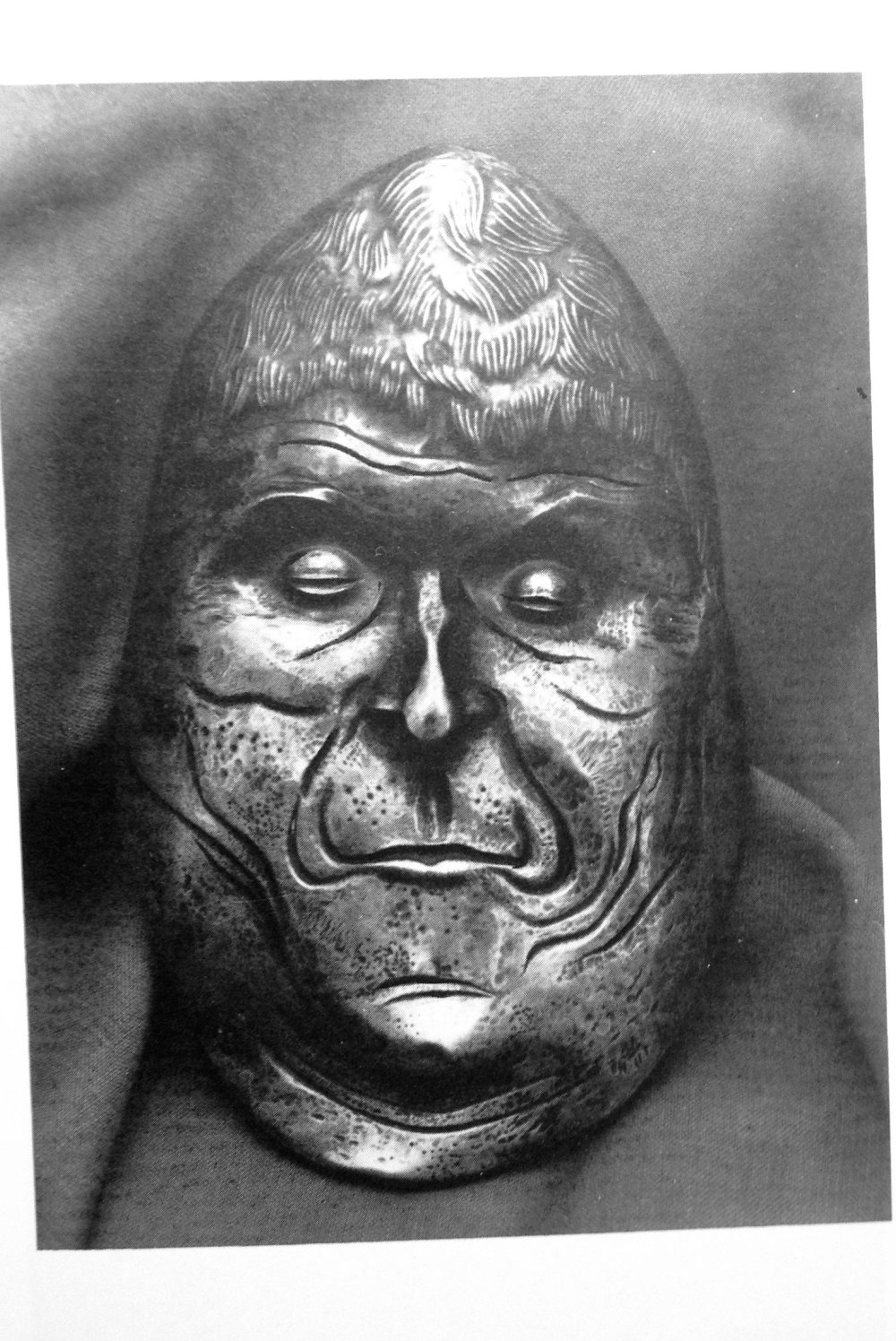
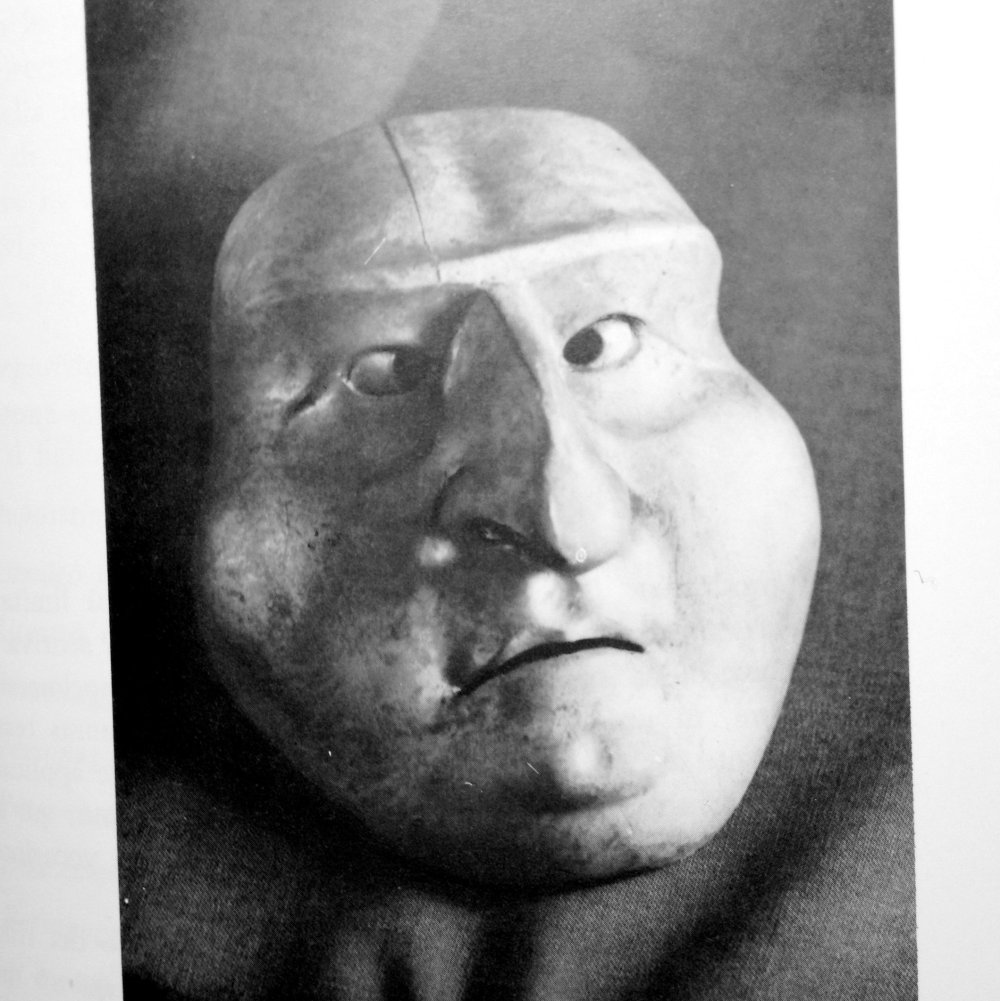
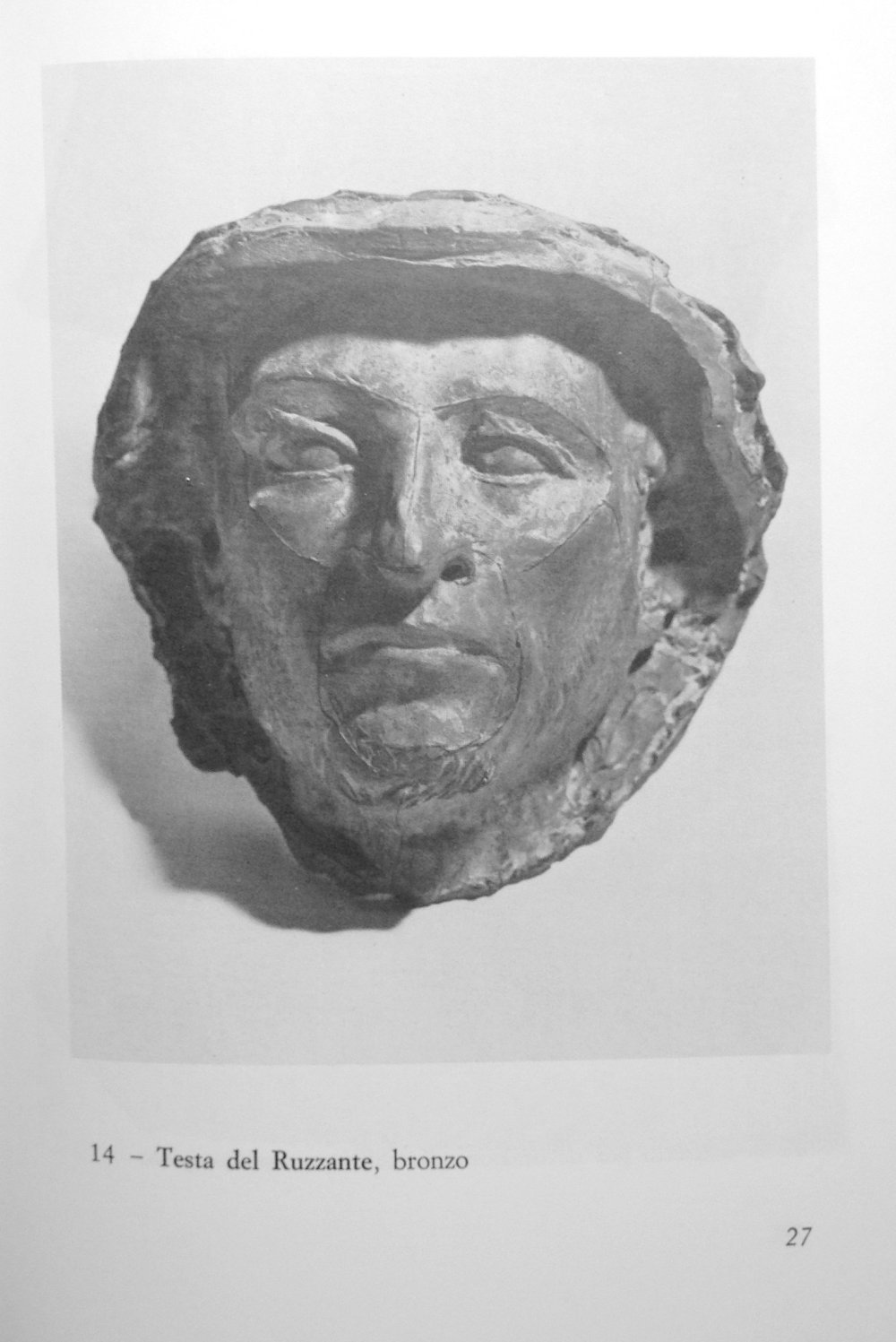
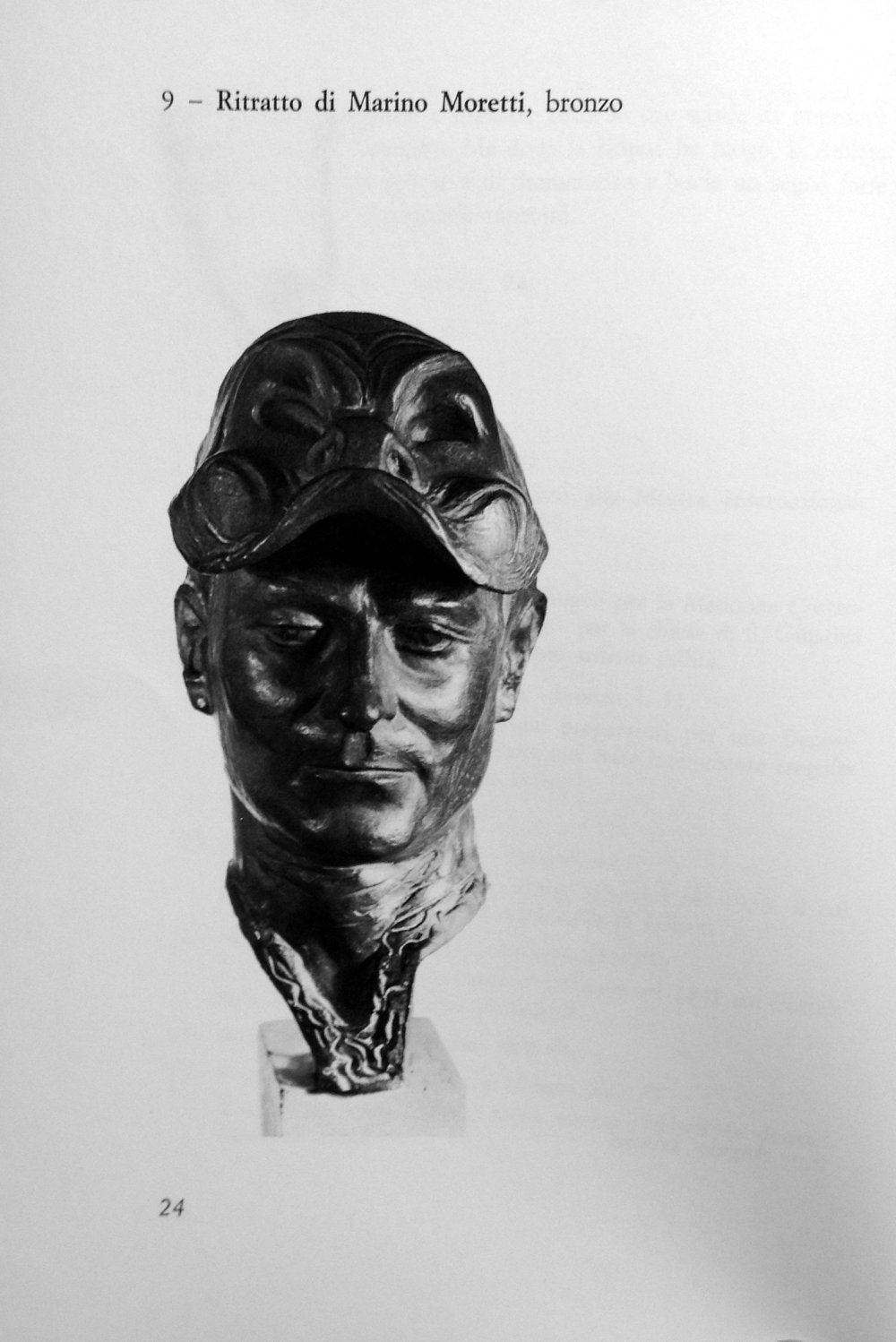
A few miscellaneous slides to cap off the review of Sartori's book. A wooden mask with an unintentionally funny crack down the forehead. A bronze mask exhibiting a wide range of surface treatments, similar to some of the leather masks. And a few non-mask sculptures — a man with molding flash across his face, and lastly a Commedia actor fresh off the stage, his mask lifted, revealing a calmness not often present in the character he just got done playing.